

How to Grow Food on Your Balcony in 3 Steps

For a lot of us, the balcony is the best place we’ve got to grow food. Often, it’s the only place we’ve got. So let’s get a couple of things out of the way right off the start. You can grow a surprising amount of food on a balcony, and it can take a lot less effort than you might think. If you’re picking the greens for dinner a few feet from where you’re making the dressing, I’d say that space is doing pretty well for you.
The key is getting the right fit. What’s a good garden for your balcony? And what’s going to work for you on a sunny Friday in July when you want to head out of town for the weekend? That second question is a big part of why we started building balcony gardens in the first place. In my experience, if you get these three things right, you’re in pretty good shape.
Assess your balcony’s sun exposure
First things first. How many hours of direct sun actually reach the spot where you want to grow?
If you’re good at visualizing, just walk out on your balcony and trace the sun’s path. Where does it come up? When does it clear the building next door? At what point does it disappear behind the balcony above you? Think about a typical day during the growing season. An estimate is usually good enough to get started.
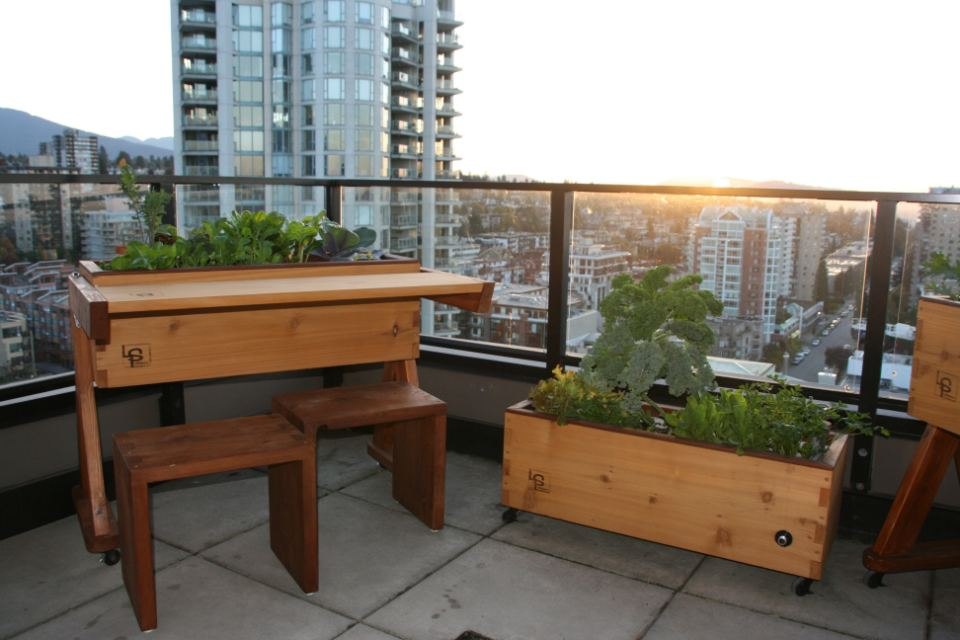
Here in Vancouver, a south-facing balcony with a clear view can get eight hours of summer sun or more. East-facing tends to give you morning sun, west-facing gives you afternoon sun, and north-facing is generally where it gets a little trickier. And remember, you can add those hours together. Say you get three hours in the morning, then the building next door blocks the sun for a while, then you get another three in the afternoon. Well, that’s six hours. You can grow a lot with six hours.
If you want to get a little more precise, there’s a paid app called Sun Seeker. We have no affiliation with it. I just think it’s a pretty cool tool. You can stand where your garden’s going to go, hold up your phone, and see how the sun tracks across the sky at different times of year. Pretty handy when you’re standing outside in February trying to picture July.
Once you’ve got a feel for your light, here’s where I’d start.
| How much direct sun do you get? | What I’d try growing |
|---|---|
| Around 4 hours or less | Start with leafy greens and herbs. Give some leaf lettuce, parsley, or chives the brightest spot you’ve got and see how they do. |
| 4–6 hours | This is kind of a magical zone for a salad garden. Lettuce, arugula, a little kale. You can get a pretty nice mix going in one planter. |
| 6 hours or more | Now you’re getting into tomatoes, cucumbers, and peppers. Give whichever one you’re most excited about the sunniest spot. |
That being said, I always like to push it a little. One thing we’ve seen growing in the city is how much light can bounce off the windows across the street. We’ve grown veggies on north-facing balconies that get surprisingly bright because of that reflection. So if you’ve got four hours of sun, plan on the greens, sure. But if you love peas, put a few in and see what happens. Push it a little. That’s how you find out what your balcony can do.
Make a maintenance plan that fits your routine
Okay, so when we talk about maintaining a balcony garden, the big one is watering. You’re growing in a container. It’s disconnected from the earth, the roots can only go so far, and if there’s another balcony overhead, you’re probably the one putting every drop of water in there.
In the summertime, that can mean watering before you leave for work and then doing it again when you get home. Twice a day is a lot to ask of somebody who just wants to grow a few veggies. And what happens when you go away for the weekend?
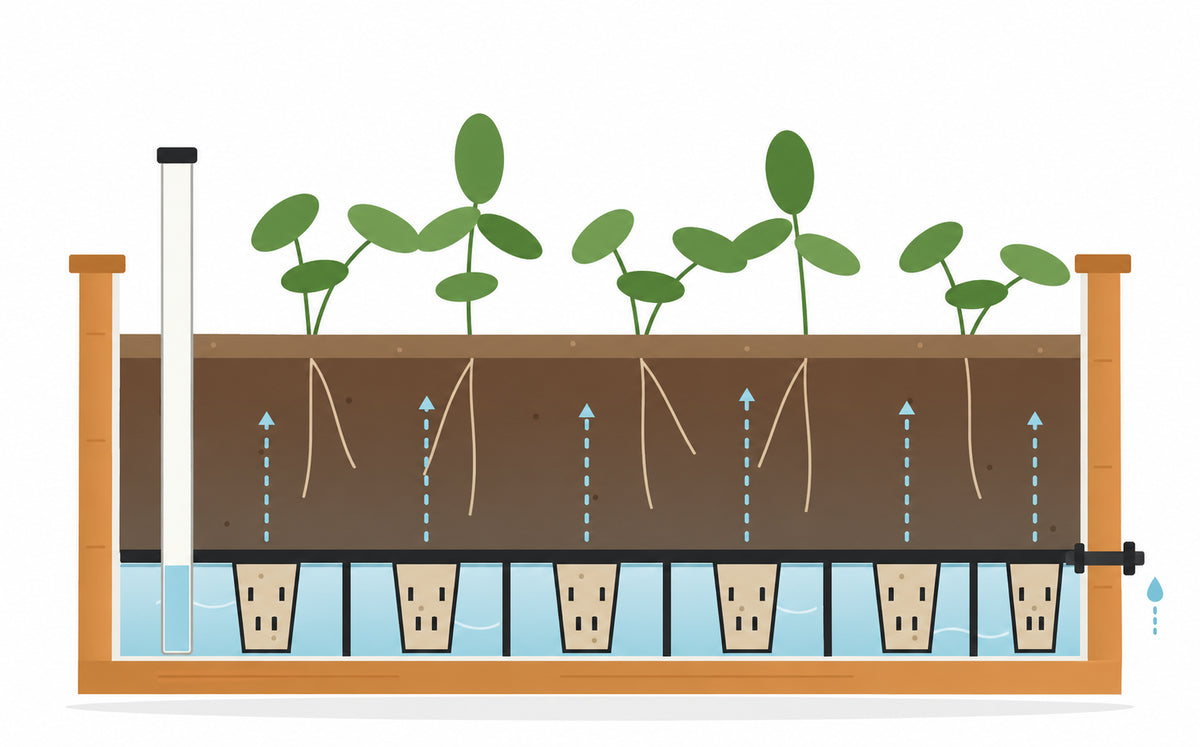
That’s the problem we set out to solve with our CondoFarms. There’s a reservoir under the soil. You fill it through the WaterStem, the water wicks up, and the roots have access to moisture throughout the day. Under the same summer conditions where you might be watering a regular container once or twice a day, you could be filling your CondoFarm once or twice a week. How often depends on the weather and what you’ve got growing in there. A planter full of mature tomatoes in August is going to drink a whole lot more than a few little starts in May.
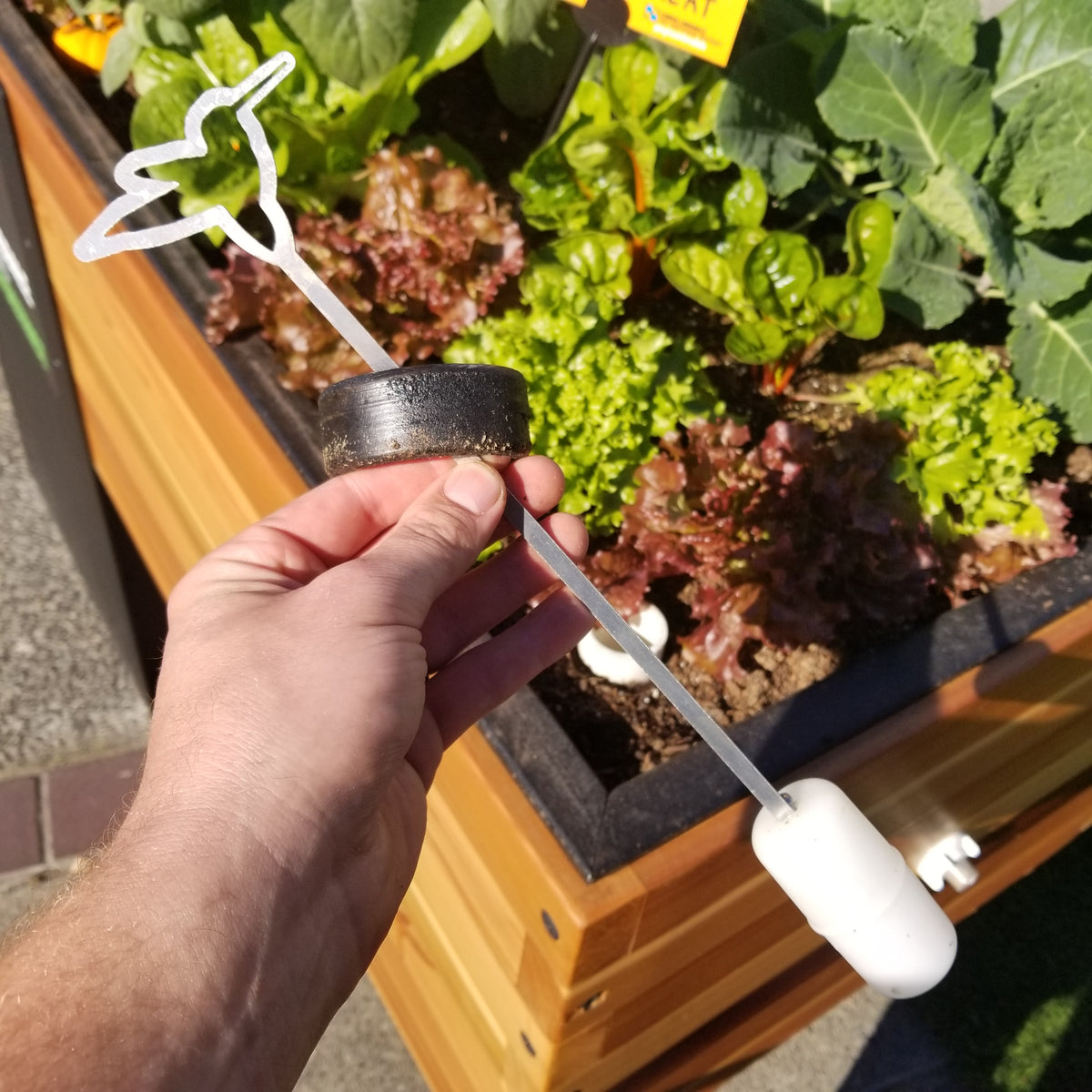
My advice? Pick a garden day. Monday morning, Wednesday after work, Sunday afternoon. Whatever day you know you’ll actually get out there. Check the hummingbird float, top up the reservoir if it needs it, and pick whatever’s ready while you’re there.
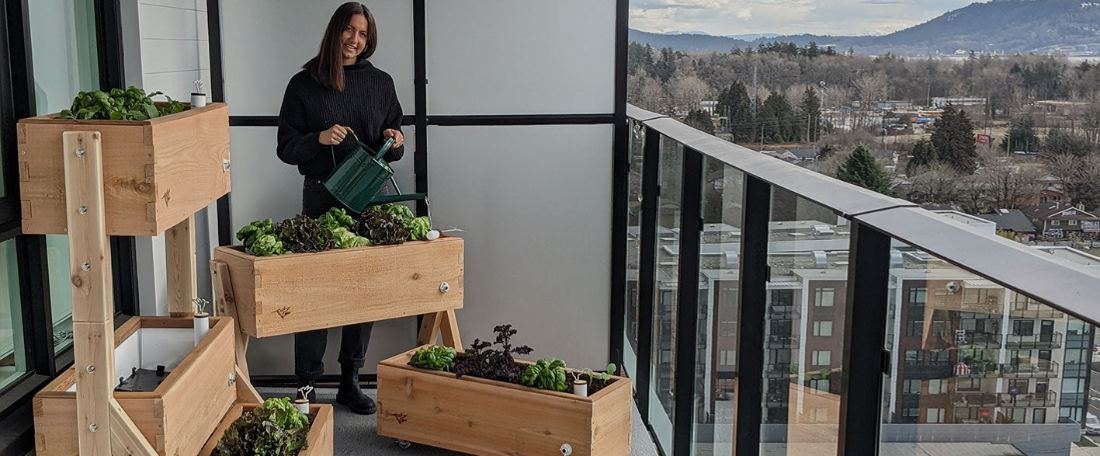
In the beginning, take another look midweek so you get a feel for how much your garden drinks. Pretty soon you’ll know, “Okay, it’s been hot, those cucumbers are really going now, I’m going to give that reservoir a check before we head out on Friday.” That’s the routine you’re after.
Select the right veggies and varieties
This is the fun part. What do you actually want to eat? Start there, line it up with the sun you’ve got, and then pay attention to the variety. That last bit makes a big difference on a balcony.
Take cherry tomatoes. You can walk into a nursery and see two little tomato plants sitting side by side. One is an indeterminate variety that could grow eight to twelve feet tall. The other is a little patio variety that might top out at a foot or two. Both grow cherry tomatoes. Only one of them is going to leave you room for your chair.
So when you’re looking at seeds or starts, keep an eye out for words like patio, dwarf, bush, or container. Then check the tag to see how tall and wide that particular plant wants to get. If you’re after a little cherry tomato, Red Robin is a good example. The whole plant typically grows about 20–30 cm tall. For lettuce, there’s a variety called Tom Thumb that grows a little butterhead about the size of a tennis ball. You can picture how something like that is going to fit.
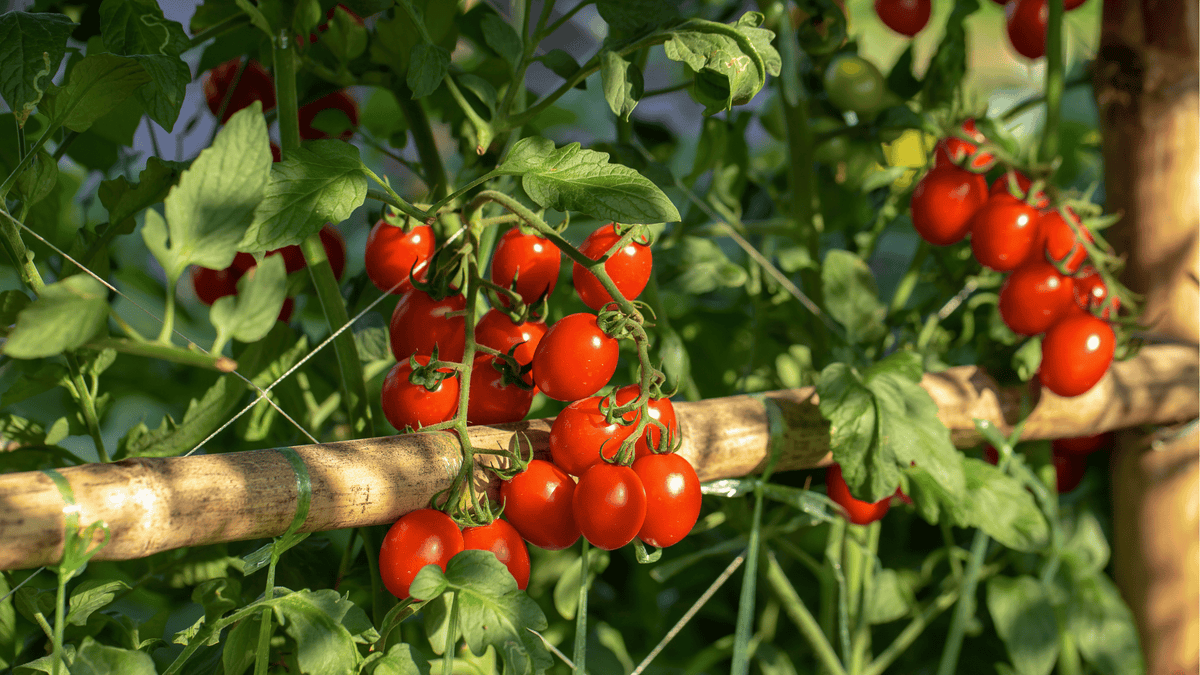
And talk to the people at your local nursery. Tell them, “I’ve got a three-foot planter, I get about five hours of sun, and we eat a lot of salad. What would you put in there?” You’ve just given them a pretty good idea of what’s going to work for you.
Want a bit of a head start? We’ve put together planting plans for our CondoFarms so you can see what to grow, where to plant it, and how much room to give everything. Pick a plan that fits your sunlight and what you like to eat, then take it with you to the nursery so you know what to look for.
And that’s pretty much it. Figure out what sun you’ve got, get into a watering routine that works for you, and give that space to veggies you’re excited to eat. Maybe this season you grow most of the lettuce your family goes through. Maybe you grow the cherry tomatoes your kids pick every time they walk past. Either way, you’ve taken a little piece of outdoor space and made it part of how you feed yourself. That’s a pretty good use of a balcony.
You can explore our Garden Guides to see what to plant through the seasons, or check out the CondoFarms collection to find a garden that fits your space and your lifestyle. Get out there and get growing.
 GardenWell RoutineThe Self-Watering Advantage: Sub-Irrigation 101
 CompostFinding the Right Soil for Your Self-Watering Garden
 GardenWell RoutineHow to Set Up Your LifeSpace Garden