

The Self-Watering Advantage: Sub-Irrigation 101

Say it’s Friday afternoon in July. Your tomatoes are setting fruit, your cucumbers are climbing the trellis, and you’re heading out for the long weekend. You give the garden a good soak before you leave.
Is your garden still going to be alive when you get home?
That’s the question that got us building self-watering gardens at LifeSpace. A raised bed on a patio has a limited amount of soil to hold water. Once water runs out the bottom, it’s gone. Once the sun comes out, it dries up. But if you can store it underneath the garden, you can water for days or weeks at a time, and the soil can keep drawing it up to the roots while you’re away.
That’s sub-irrigation, and it’s the idea behind every LifeSpace garden we build, and the principle behind the GardenWells system.
Here are the advantages
But before we start... How does a Self-Watering Garden work?
Picture the corner of a damp sponge sitting in a dish of water. Moisture travels up through the sponge, even though only one corner touches the water. That’s capillary action. A self-watering raised bed, also called a wicking bed or sub-irrigated planter, uses that same principle to move water up through soil.
At LifeSpace, we use the GardenWells system. You fill the reservoir through the WaterStem. The GardenWells support the soil on top and draw moisture up into the growing mix. An overflow sets the maximum water level, preserving an air gap beneath the bed so the roots have access to oxygen, while regulating the water level so your garden never floods. The float in the WaterStem shows you how much water is left. There’s no pump to run or timer to program.
Simple, easy, foolproof. It's fundamental principles at their finest.
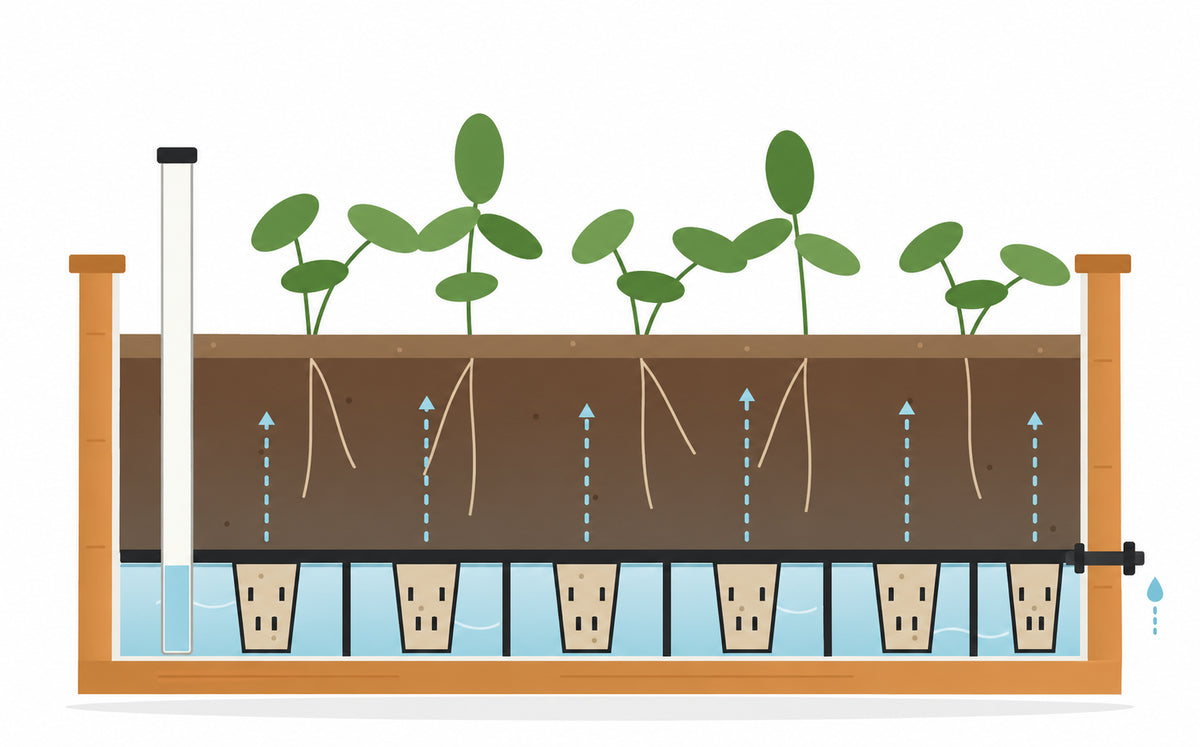
So what changes when you water a garden from the bottom up?
Water Consistency = A More Abundant Garden
Let’s start with why we’re growing vegetables in the first place. We want really good food, and we want plenty of it.
Read the back of any seed pack and it will say something like "provide consistent and even moisture." That's what sub-irrigation does. Unlike hand watering where you risk having your garden dry out in-between, or with drip irrigation that can get displaced or not reach the areas of the garden you need it to... sub-irrigation is all about consistency. That consistency leads to healthier plants and more abundance.
That balance of moisture and oxygen makes a difference when your tomato plant has ripe fruit on the bottom branches, green tomatoes in the middle, and flowers at the top. A steady supply of water helps it carry that whole crop through to harvest.
Daily Watering Becomes a Weekly Check-in
A two-by-four-foot garden built with GardenWells holds about 56 litres of water underneath the soil. That’s a pretty good head start on a hot week.
So instead of having to water every day, establish a routine where your checking it once a week and get a feel for your garden. A bed full of tomatoes and cucumbers in the middle of a July heat wave might need filling twice a week. In cooler weather, you might go a couple of weeks or longer between fills. Here in Vancouver, we’ve had entire growing seasons where we’ve only filled our gardens eight to twelve times.
In any case, it's a lot easier than having to water once or twice a day!
Saving Water, Retaining Rainfall.
You know when you’re watering a planter and you see water running across the patio? That’s usually how you know you’ve watered enough. It’s also water you’ve just lost.
With a self-watering garden, the water you add stays in the reservoir beneath the soil. It’s sheltered from the sun and wind, so you lose less to evaporation. And because you can fill the reservoir directly, you don’t have to soak the bed until water runs out the bottom.
Rain counts, too.
Say it rains on Tuesday and the sun comes out on Wednesday. In an uncovered self-watering bed, Tuesday’s rain can still be watering your vegetables on Thursday.
It rains. The water soaks into the growing mix and collects in the reservoir.
The sun comes out, and the soil begins to dry.
Tuesday’s rain is still watering your vegetables.
Rain soaks into the growing mix, and water that passes through can collect in the reservoir. The next time the soil begins to dry, that rain wicks back up to the roots.
You can really optimize this by integrating additional rainwater collection systems.
Growing Food Where Watering is a Hassle
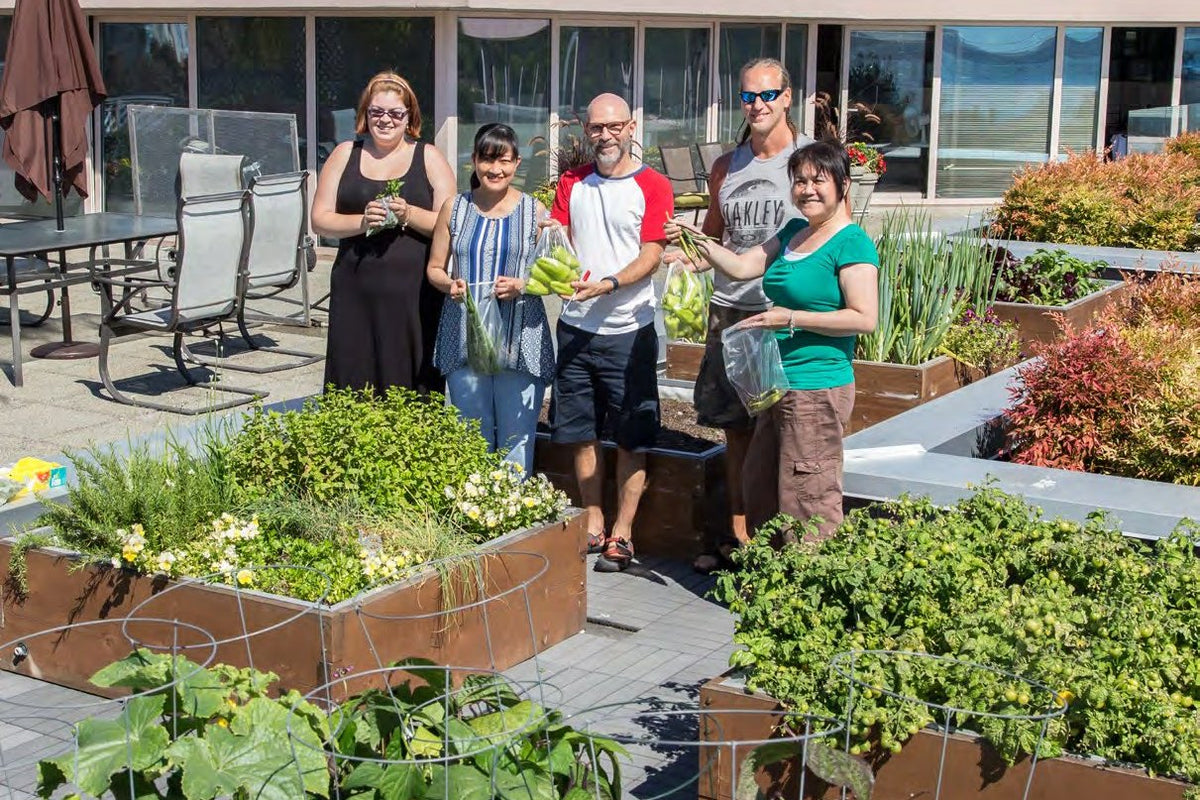
A school garden can have plenty of sun and a whole classroom of enthusiastic gardeners. Then July rolls around. Who’s there to water? GardenWells gives the summer volunteers a manageable job: check the float, fill when needed, and let the garden keep growing between visits. Plan those check-ins around the weather and the kids can come back in autumn to something worth harvesting.
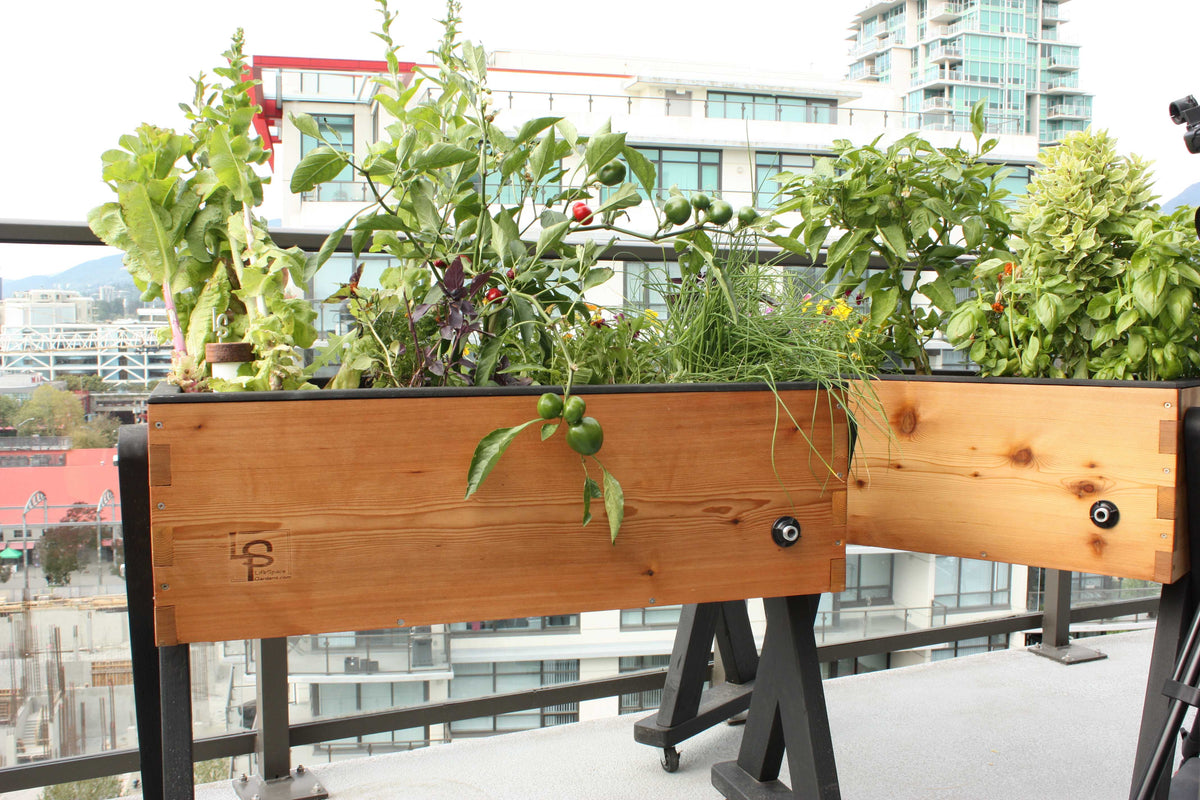
On a balcony, the challenge might be carrying every litre through the kitchen. On a senior living terrace, the resident who loves picking herbs for lunch might have no interest in hauling a hose. On a commercial rooftop, the challenge is getting water to a whole collection of planters and giving excess water a predictable place to drain. In each case, storing water at the garden makes it easier to separate the watering schedule from the simple pleasure of stepping outside to pick something.
The Liner Helps Your Garden Last Longer.
This is the advantage most people don’t think about. I love the look of a cedar garden. But, one of the frustrations with conventional wooden raised beds is that they rot.
However…
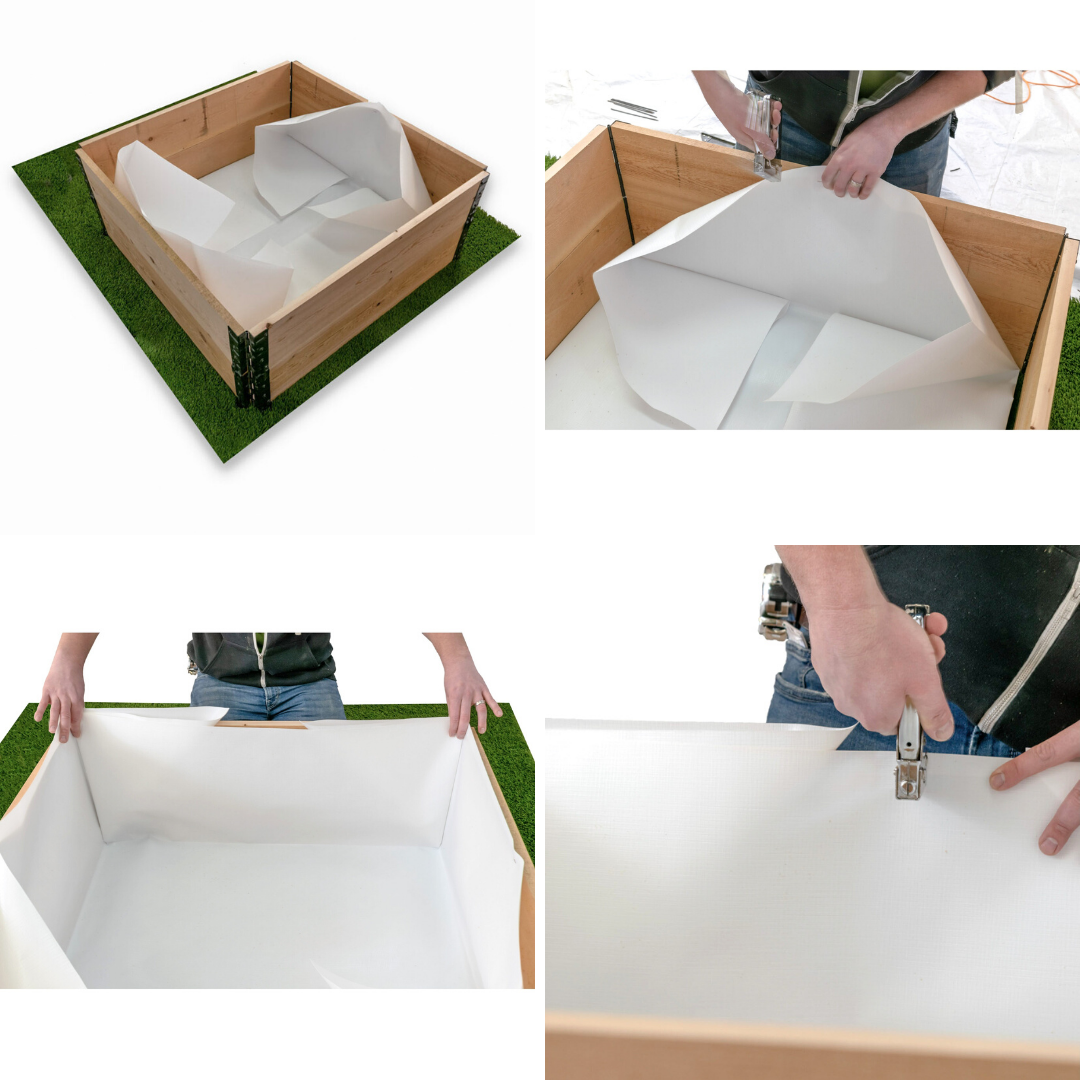
When you build a raised bed with GardenWells, you install a food-safe waterproof liner inside the planter. It does two jobs. It creates the watertight reservoir, and it keeps wet soil away from the inside face of the wood. With the liner intact and the overflow properly sealed, water stays in the garden until it reaches the overflow. So there’s no contact between the woodwork and the soil or water inside.
That means no rot, and gardens with 2–3x the lifespan of conventional raised beds.
The Self-Watering Advantage, Summarized
- Less maintenance. Check the float once a week, and you can go away on that long weekend without water worries.
- Less water wasted. The water stays beneath the soil, sheltered from sun and protected from evaporation.
- Better vegetables. Established roots get a steadier supply of moisture, and the air gap gives them room to breathe.
- Rain saved for later. Rain that collects in the reservoir wicks back up to the roots on sunnier days.
- Grow where watering is hard. School gardens, balconies, senior living terraces and commercial rooftops.
- A longer-lasting garden. The liner keeps wet soil away from the inside face of the wood.
Irrigation Comparison Chart
| GardenWellsSub-Irrigation | Drip Irrigation | Sprinklers | |
|---|---|---|---|
| Watering FrequencyHow often it needs attention |
★★★★★ Weeks between fills |
★☆☆☆☆ Daily |
★☆☆☆☆ Daily |
| Water EfficiencyHow much reaches the roots |
★★★★★ Up to 80% less water* |
★★★☆☆ Medium evaporation |
★☆☆☆☆ High waste & run-off |
| Rainwater RetentionFree water captured, not drained |
★★★★★ Captures & stores rain |
☆☆☆☆☆ None |
☆☆☆☆☆ None |
| Ongoing RepairsYear-round upkeep & parts to replace |
★★★★★ No parts to replaceFreeze-thaw safe — nothing to service or blow out. |
★☆☆☆☆ Clogs & emitters to replace |
★☆☆☆☆ Heads & lines to repair |
| Plant HealthConsistent moisture, fewer callbacks |
★★★★★ Even moisture |
★★★☆☆ Precise Placement Required |
★★☆☆☆ Wet foliage, disease risk |
| Setup CostUpfront install |
★★★★☆ Medium — no plumbing |
★★☆☆☆ High — needs plumbing |
★★☆☆☆ High — needs plumbing |
| Garden LifespanHow long the build lasts |
★★★★★ Protect Woodwork, Prevents rot |
★☆☆☆☆ No additional protection |
★☆☆☆☆ No additional protection |
| AestheticsWhat the client sees |
★★★★★ Invisible system |
★★☆☆☆ Visible tubing |
★★☆☆☆ Cluttered heads |
* Up to 80% less water vs overhead/traditional watering (USDA Forest Service).
Bonus Questions about self-watering gardens
What is sub-irrigation, and what is a sub-irrigated planter (SIP)?
Sub-irrigation means watering a garden from below instead of from the top. A sub-irrigated planter, also called a wicking bed or a self-watering planter, holds water in a reservoir under the soil. As the plants use the moisture in the root zone, more wicks up from below.
What’s the difference between sub-irrigation and drip irrigation?
Drip irrigation runs water through tubing and emitters onto the soil, usually on a timer. Sub-irrigation stores the water under the soil, sheltered from the sun, and the soil draws it up as it begins to dry. There’s no pump to run or timer to program.
What’s the best soil mix for a self-watering raised bed?
A loose mix that holds moisture. One blend we like is 3 parts coconut coir or peat moss, 2 parts finished compost and 1 part horticultural vermiculite, pumice or perlite, measured by volume. If you’re buying bags, look for an organic container mix suitable for vegetables. Our soil guide covers what to buy or mix.
How deep should the soil and the water reservoir be?
For vegetables, plan for 3" of water reservoir plus 8 to 12" of soil.
How do you know when a self-watering planter needs more water?
Check the float in the WaterStem. When the reservoir is full, the float is fully up, about 3" above the cap. It drops as the plants use the water. When it’s low, fill the reservoir.
Do you still need to water seeds and seedlings from the top?
Yes. Seeds start at the surface, so keep a freshly sown row moist from above, and top water new plants until they’re established, usually at 2 to 3" tall. Once the roots reach the wicking zone, the reservoir takes over.
How long can you leave a self-watering vegetable garden when you go away?
That depends on the weather, what you’ve planted and how big it’s grown. Before you go away, watch how far the float drops over a few warm days. That gives you a feel for how long your garden can go between fills. Then check the float and top up the reservoir before you head out.
Can you overwater a self-watering planter or cause root rot?
The overflow sets the highest water level in the reservoir, so the garden can’t flood, and it keeps an air gap between the water and the soil so the roots get oxygen. Build on a level spot: if the garden isn’t level, water can flood up into the soil and drown the roots.
Why is the soil dry on top when the reservoir is full?
That’s normal. The top 2 to 3" of soil dries out and works as a mulch, locking the moisture in down below. Feel the soil a few inches down. If the whole bed has dried out, restart the wicking by watering from the top, then refill the reservoir.
How do you build a self-watering raised garden bed?
Prepare a level spot, build the box, drill the overflow hole, install the liner and the overflow, then fit the GardenWells and the WaterStem and fill with soil. Our step-by-step guide, How to Build Your Own Self-Watering Garden, walks you through it.
How many fills will your garden need where you live?
Your seasonal routine
Vancouver
About 15 projected reservoir fills per year
Projected fills by month
How often you water in a year
Top watering takes about 8 times as many waterings.
These projections give you a sense of how often you may need to refill during your growing season. They use typical local temperatures and rainfall for a garden open to the rain. Check your WaterStem float and refill when it runs low.
How the calculator works
We use daily highs and rainfall from the last ten complete calendar years. For an established garden, we estimate daily water use as a share of a full reservoir.
- 50°F (10°C) or cooler · Minimal demand, modeled as zero.
- Above 50°F and below 68°F (above 10°C and below 20°C) · One reservoir over two weeks.
- 68–77°F (20–25°C), inclusive · One reservoir per week.
- Above 77°F (25°C) · Two reservoirs per week.
We start with a full reservoir holding 7 litres per square foot, subtract each day’s estimated use and add the rain that falls on the bed. Stored rain carries into the next day. Excess water overflows.
Each time the modeled reservoir runs dry, we count one manual fill. We carry water forward across months and consecutive complete years, then average each month’s fills. The initial fill is excluded. The open-bed estimate assumes all rain can reach the garden. Roof cover, foliage and actual plant demand can change the result.
“<1” means fewer than one on average in that month. Yearly totals use the unrounded monthly averages.
For comparison, top watering (watering from above by hand or hose) is counted from the same daily highs:
- 50°F (10°C) or cooler · No top watering.
- Above 50°F and below 59°F (above 10°C and below 15°C) · Once a week.
- 59°F to below 68°F (15°C to below 20°C) · Twice a week.
- 68–77°F (20–25°C), inclusive · Once a day.
- Above 77°F (25°C) · Twice a day.
Rain isn’t counted for top watering. Its yearly total is averaged over the same ten years.
Climate and location data from Open-Meteo · Place names from GeoNames
 CompostFinding the Right Soil for Your Self-Watering Garden
 GardenWell RoutineHow to Set Up Your LifeSpace Garden
 BalconiesHow to Grow Food on Your Balcony in 3 Steps